Loading...
Serving Harlingen, TX and surrounding areas. Concrete Installation Services Only - Not a Concrete or Cement Supplier.
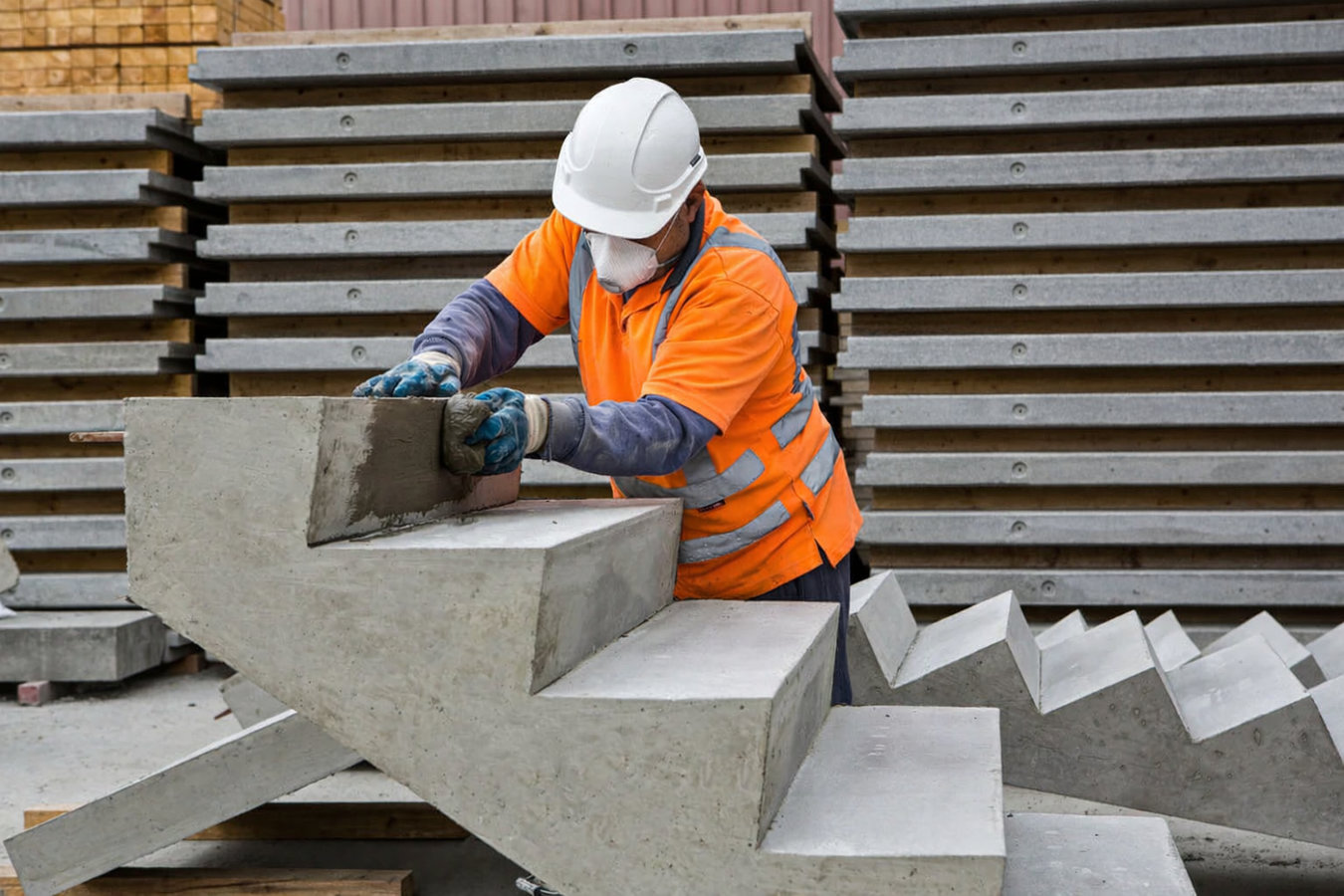
Crumbling or tilting steps are a hazard at your front door. We build concrete steps in Harlingen with proper soil prep, non-slip finishes, and clean edges that hold up through the Valley's heat, rain, and shifting clay ground.
Concrete steps construction in Harlingen means demolishing any old steps, compacting the ground underneath to handle clay soil movement, building a wood or steel form in the shape of your new staircase, pouring reinforced concrete, and finishing the surface with a non-slip texture - most residential step projects take one to two days of active work, with light foot traffic possible after 24 to 48 hours.
Most homeowners call because their existing steps have started cracking, tilting, or pulling away from the house - problems that are common in Harlingen because the heavy clay soil under most properties shifts with every wet and dry cycle. Once steps start separating from the foundation or rising unevenly, patching is usually a short-term fix at best.
If your project connects to a walkway or driveway, we coordinate steps work with our concrete sidewalk building service so both surfaces are graded and finished consistently. The Portland Cement Association recommends proper subgrade compaction and steel reinforcement as the baseline for concrete steps that stay level over time - both are standard on every job we do.
Cracks you can fit a finger into or that have edges sitting at different heights mean the concrete is breaking down. In Harlingen, this usually happens because the clay soil underneath has shifted through repeated wet and dry cycles. Small surface cracks can sometimes be sealed, but wide or deep cracks typically mean the steps need to be replaced.
If one step feels lower than the others or the whole staircase leans to one side, the ground underneath has likely shifted. This is a common problem in the Rio Grande Valley because of expansive clay soil, and it tends to get worse over time. Uneven steps are also a tripping hazard - especially for older family members or anyone carrying bags at the door.
When step edges are flaking away or crumbling, the concrete has reached the end of its useful life. This kind of surface breakdown is accelerated by Harlingen's intense sun and heat, which dry out older concrete and make it brittle. Once the corners go, the damage spreads faster and patching rarely holds for more than a season.
If you can see or feel a gap where your steps meet the threshold or wall of your home, the steps have pulled away from the structure. This gap lets water in, which can eventually damage the foundation - a serious concern in a climate with heavy rain events. It is also a tripping hazard at the exact spot where people are most likely to be off-balance.
We build concrete steps for front entrances, back doors, garage entries, and porch landings. Every project starts with proper ground preparation - we do not skip the sub-base compaction step that most failed steps in the Valley have in common. A standard broom-finished staircase is our most common project, but we also offer decorative options for homeowners who want something that looks as good as it functions. Handrails can be set directly into the wet concrete for the most secure anchor possible, and we size every step run for code-compliant rise and run proportions so they are comfortable to use.
When steps connect to a larger concrete surface, we coordinate with our other flatwork services. For homes where the steps lead to a landing that connects to the front walk, we can tie in our concrete sidewalk building work so the whole pathway from street to door is poured and graded together. For homes on a slab that needs examination before steps are built against it, we can assess the foundation condition as part of our slab foundation building expertise - because steps that attach to a shifting slab will not stay level no matter how well they are poured.
For homes replacing original or failing steps - full demo, sub-base prep, reinforced pour, and non-slip broom finish sized for the existing entry dimensions.
For utility entrances that need a safe, durable landing - simpler proportions, same structural standards, quick turnaround with minimal disruption.
For homeowners who want their entry to make a good impression - stamped or exposed aggregate finishes that add character while keeping grip underfoot.
For households with elderly residents or young children - anchor posts set in wet concrete during the pour for the strongest possible handrail attachment.
Two things drive most of the step failures we see in Harlingen: expansive clay soil and aging housing stock. Much of the city - particularly the established neighborhoods near downtown and along the historic arroyo drainage channels - has homes built between the 1950s and 1980s. Original concrete steps on those houses are now 40 to 60 years old, and the rebar inside many of them has started to rust and expand, cracking the concrete from the inside out. The clay soil adds another layer of stress by constantly pushing and pulling at the base. A contractor who understands the Valley does not just pour new concrete on top of the old problem - they remove the old steps and fix the ground first.
Harlingen's rainy season runs from May through October, and slippery steps during an afternoon storm are a genuine safety hazard for everyone in the household. A properly textured finish from the start eliminates that risk. We build steps all across the Valley, including homeowners in San Benito and Brownsville, where the same clay soil and aging housing conditions apply.
We come out to measure your entry, look at the existing steps, and check the ground condition underneath. You get a written quote that breaks down labor, materials, demolition, and permit fees separately. We respond to all new inquiries within 1 business day.
If the scope requires a permit - which we determine upfront - we file it with the City of Harlingen before any work begins. Permit processing usually takes a few business days. You will get a confirmed start date once the paperwork is in hand.
Old steps are broken up and hauled away on day one. We then prepare the ground - removing unstable soil, adding compacted gravel, and sometimes setting rebar - so the new steps have a stable base that will not shift with the clay underneath. This step determines how long the new steps stay level.
The form goes up, concrete is poured, and the surface is finished to your chosen texture. In Harlingen's heat, we schedule pours for early morning and protect fresh concrete from drying too fast with curing compound. The entrance will be off-limits for at least 24 hours after the pour - plan to use a side or back door during that window.
No obligation. We come out, look at your entrance, and give you a clear written quote - so you know what the project costs before we touch anything.
(956) 506-1911The number one reason concrete steps fail in the Rio Grande Valley is an inadequate base. We compact the ground, add gravel where needed, and sometimes set rebar before we ever pour - because steps that sit on properly prepared ground stay level through years of wet and dry soil cycles.
We texture every set of steps with a broom finish or equivalent grip surface as a baseline practice. In a climate where afternoon rainstorms are common from May through October, smooth concrete at your front door is a liability. Our finishes give you real grip in wet conditions.
Many homes in established Harlingen neighborhoods were built in the 1950s through 1980s, and we work on older properties regularly. We know how to remove original steps with rusting rebar, handle the soil conditions underneath, and build replacements that fit proportionally with the existing structure.
You see labor, materials, demo, and permit costs as separate line items before you agree to anything. Texas does not require a state license specifically for concrete work, but contractors must be properly registered and insured - check the Texas Secretary of State to verify any contractor you are considering is a registered business entity. We are, and we are happy to provide proof of insurance before work begins.
A crumbling front entrance affects both safety and how your home looks from the street. We replace failing steps with solid, properly built concrete that holds up through the Valley's heat, clay soil movement, and rainy seasons - and we do it without surprise costs at the end of the job.
If your home's slab is shifting and pulling steps away from the structure, a foundation assessment should come before new steps are poured.
Learn moreConnect new steps to a properly graded sidewalk that channels water away from the entry and gives visitors a clear, safe path from the street.
Learn moreOur schedule fills quickly in fall and winter - the best time for concrete work in South Texas. Call or send a message today to lock in your project date.