Concrete Driveways
Your driveway is the first thing people see when they pull up to your home. Let us pour one that holds up to the Texas heat and looks great for years.
Why Your Driveway Material Matters More Than You Think
A lot of homeowners in Harlingen and the Rio Grande Valley are still driving on old cracked asphalt or deteriorating gravel. Those surfaces get worse over time, especially in our climate. The heat expands and contracts the material, water gets underneath, and before long you have a surface that is uneven, cracked, or just plain ugly.
Concrete is different. When it is properly poured and cured, it can last 30 years or more with very little maintenance. It reflects heat rather than absorbing it, which means it stays cooler underfoot on hot Texas days. And it looks clean and professional from the moment it cures.
At Harlingen Concrete Contractor, we have poured driveways for homeowners all across Harlingen, TX, and we know what it takes to do it right here. The soil conditions, the temperature swings, the heavy rains in the summer. We account for all of it in every pour we do.
What Goes Into a Properly Built Concrete Driveway
Here is the honest truth: most driveway failures come from shortcuts taken during installation. Poor subgrade preparation, skipping the gravel base, not enough rebar, or rushing the cure. We do not do any of that. Here is what our driveway process looks like from start to finish.
- Excavation and grading — We dig out the area to the right depth and grade it so water drains away from your home, not toward it.
- Compacted gravel base — A solid 4-inch compacted gravel base gives the slab something stable to sit on and helps with drainage underneath.
- Steel rebar or wire mesh reinforcement — Reinforcement keeps the slab from cracking and holds any cracks that do form tightly together.
- Properly mixed concrete — We use the right mix design for our South Texas climate, including the proper water-to-cement ratio for strength and durability.
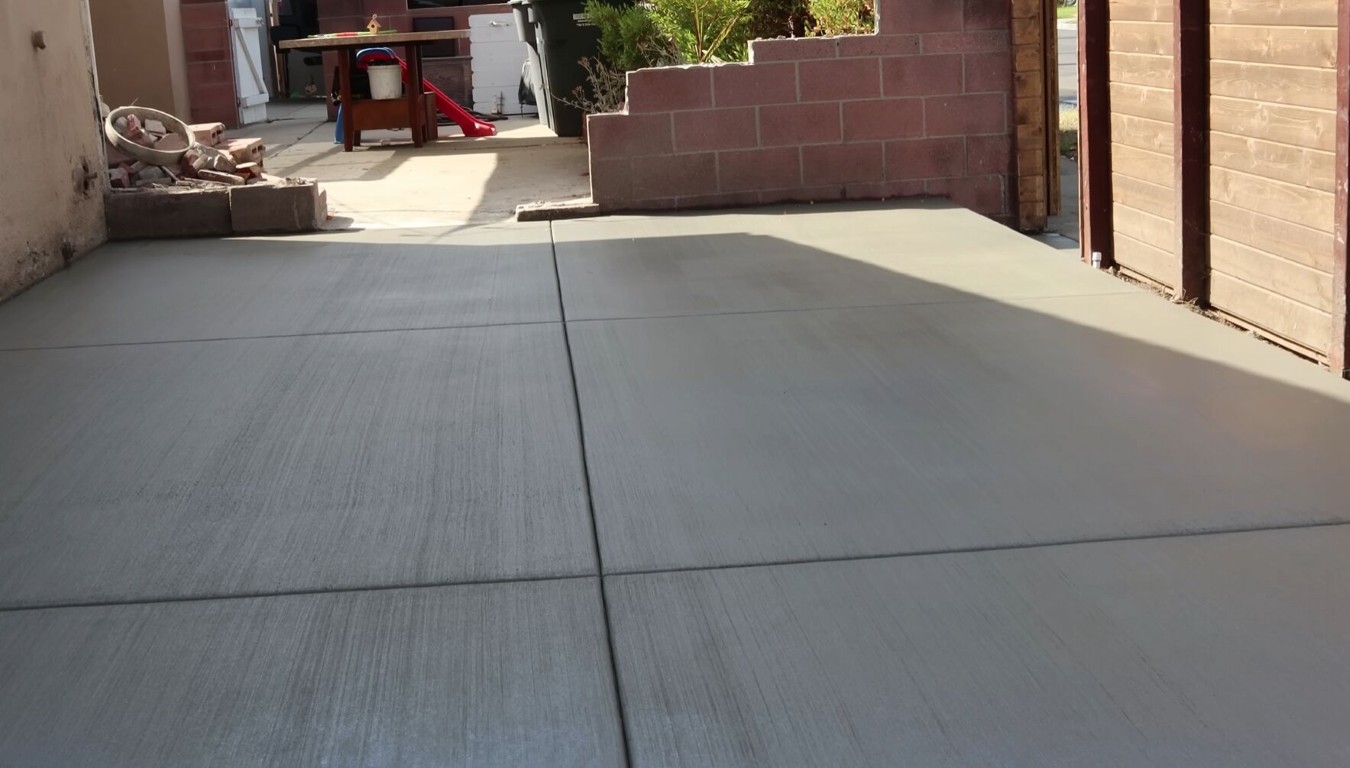
- Control joints — These planned cuts manage where the concrete cracks as it cures and expands, keeping it looking clean over time.
- Proper curing — We protect the slab during the cure period so it reaches its full design strength before anyone drives on it.
Depending on your property, we can also add decorative finishes like a broom texture, exposed aggregate, or even a stamped concrete pattern to give your driveway more visual appeal at a reasonable extra cost.
What Affects the Cost of a New Concrete Driveway
Concrete driveway costs vary based on a few key factors. Before you get any quote, it helps to understand what drives the price so you can compare apples to apples.
Size is the biggest factor. A standard single-car driveway runs roughly 10 to 12 feet wide, while a two-car driveway is typically 20 to 24 feet wide. The length depends on how far your home sits from the street. The longer and wider your driveway, the more material and labor is involved.
Thickness also plays a role. A residential driveway is typically poured at 4 inches thick, but if you have heavy vehicles like trucks, trailers, or RVs parking regularly, we may recommend going to 5 or 6 inches to handle the extra load.
Finishing options affect pricing too. A standard broom finish is the most cost-effective. If you want a smoother finish, exposed aggregate, or a decorative border, those add a modest cost. Full stamped patterns cost more than plain concrete but are still far less expensive than pavers or natural stone.
Finally, removal of an existing driveway is an added cost if we need to break out and haul away old material. We always include a clear line item for this in your quote so nothing is a surprise.
The best way to know exactly what your project will cost is to call us for a free on-site estimate. We will measure the area, look at the existing conditions, and give you a written quote with no obligation.
Common Questions About Concrete Driveways
How long does a new concrete driveway take to pour and cure?+
The actual pour typically takes one day once the prep work is done. Prep work like excavation, grading, and forming usually takes one to two days depending on the size of the project. After the pour, you should stay off the driveway for at least 24 to 48 hours and avoid driving on it for a full 7 days. Concrete reaches most of its strength within 28 days, though it continues to harden after that. We will walk you through the curing process and give you specific care instructions when we finish.
Will my concrete driveway crack over time?+
All concrete can crack. Concrete expands and contracts with temperature changes, and over time small surface cracks can develop. That is completely normal. What separates a well-built driveway from a poorly built one is how the cracking is managed. We cut control joints into the slab at regular intervals. These joints give the concrete a planned place to move, so any cracking that occurs follows a straight, clean line rather than random spider cracks across the surface. Hairline cracks along control joints are normal and not a structural concern.
Should I seal my concrete driveway?+
Sealing is a good idea and something we recommend for most driveways in South Texas. A quality penetrating sealer protects the surface from oil stains, UV fading, and moisture intrusion. You should wait at least 28 days after the pour before applying a sealer to give the concrete time to fully cure. After the initial application, resealing every two to three years is a simple and affordable way to extend the life of your driveway and keep it looking fresh. We can advise you on the right product for your specific finish.
Ready to get started? Go back to our home page to learn more about us, or explore our concrete patio installation service.