Retaining Walls & Concrete Masonry
When soil erodes, slopes shift, or you need a structure that truly lasts, a properly built concrete masonry wall is the right solution.
Your Soil Is Not Going to Hold Itself
Erosion is a real problem in the Rio Grande Valley. Heavy rains, flat terrain with poor drainage, and loose soil conditions mean that without the right structures, your yard, landscaping, and even the ground near your foundation can shift over time. A well-built retaining wall stops that from happening.
Retaining walls also let you do more with your property. They create level areas on sloped lots, define garden beds and landscaping zones, hold back soil along driveways, and add a clean, finished look to your outdoor space. Done right, they are both functional and attractive.
At Harlingen Concrete Contractor, we build retaining walls and concrete masonry structures that are engineered to handle the actual loads they will face. That means proper footings, the right block or poured concrete wall design, drainage behind the wall, and quality construction from the bottom up. A wall that is not built to handle the soil pressure behind it will fail, sometimes quickly. We build them to last.
What Type of Retaining Wall Is Right for Your Property?
There is no single wall design that fits every situation. The right choice depends on how tall the wall needs to be, how much soil pressure it will hold back, what you want it to look like, and your budget. Here are the most common options we build.
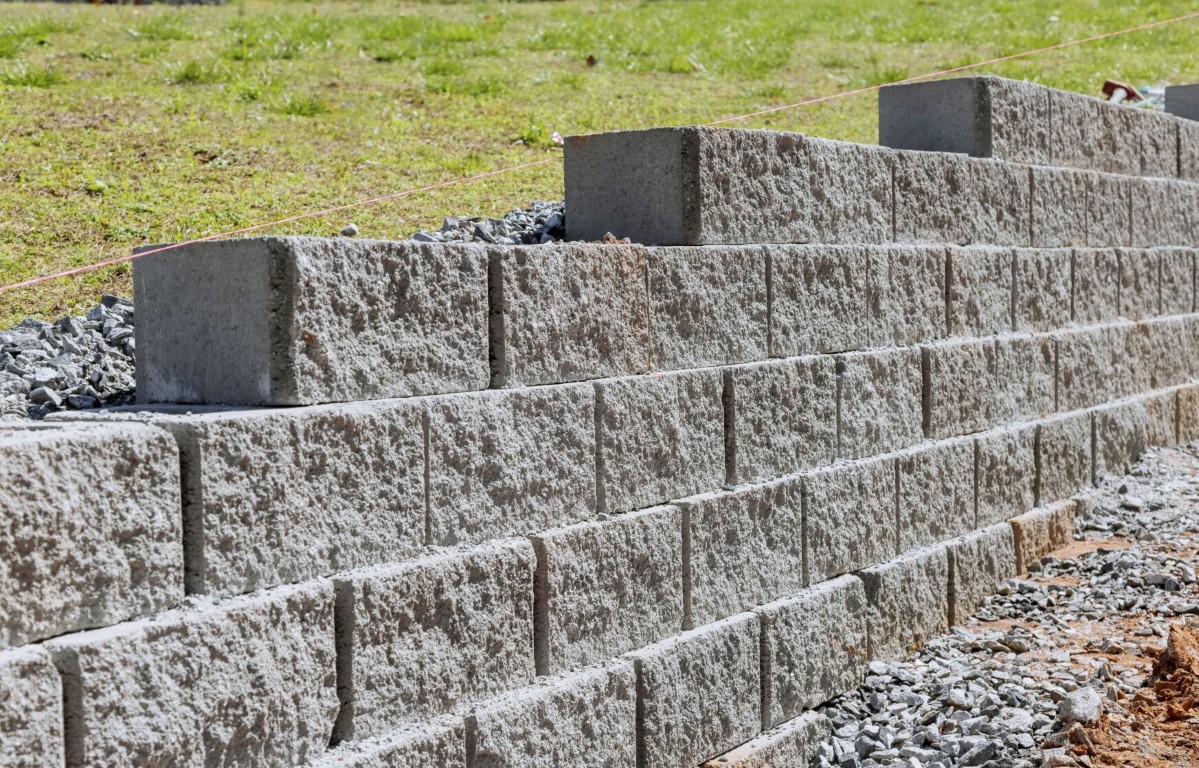
- Concrete masonry unit (CMU) block walls — Concrete block walls are strong, affordable, and versatile. They can be left as-is, plastered, or faced with stone veneer. Great for both residential and commercial applications and available in various block sizes.
- Poured concrete walls — Formed and poured-in-place concrete walls offer maximum strength and are ideal for taller walls or situations with significant lateral soil pressure. Reinforced with rebar for long-term structural performance.
- Segmental retaining walls — Interlocking concrete blocks that create a terraced, stepped appearance. Often used in landscaping to create level planting areas and garden beds.
- Decorative masonry walls — Privacy walls, property boundary walls, and garden walls that serve more of an aesthetic function but still need solid construction to stand the test of time.
- Driveway and slope retaining walls — Low walls along driveway edges or property slopes that prevent soil from washing onto paved surfaces and keep your concrete driveway clean and stable.
The Part Most People Do Not Think About: Drainage Behind the Wall
Here is something important that a lot of homeowners do not realize: water is the main reason retaining walls fail. When rain saturates the soil behind a wall, the water has to go somewhere. If you did not design drainage into the wall, that water builds up pressure behind it. Over time, that pressure pushes the wall forward, causes it to lean, or in worst-case scenarios causes a structural failure.
Every retaining wall we build includes proper drainage. For most walls, that means a layer of crushed gravel directly behind the wall to let water move freely, combined with weep holes or a perforated drainpipe at the base to let that water escape. Taller or more complex walls may need a more engineered drainage design.
This is one area where cutting costs is not worth it. A wall with poor drainage will have a shorter lifespan and may become a safety hazard. We build drainage into every wall we construct as a standard part of the job, not an add-on.
If you are also dealing with standing water or runoff issues on your property, our team can look at the broader drainage situation and recommend concrete flatwork or grading solutions that work together with your retaining wall. You can also explore our concrete slab and foundation work if the project involves a larger structural pour nearby.
Common Questions About Retaining Walls
Do I need a permit for a retaining wall in Harlingen?+
In most Texas municipalities, retaining walls over a certain height — typically 4 feet from the bottom of the footing to the top of the wall — require a building permit and may need a structural engineer's stamp. Harlingen follows similar guidelines. Shorter garden walls and landscape walls often do not require a permit, but walls that hold back significant amounts of soil or are close to property lines may still require review. We will check the specific requirements for your project as part of our estimating process and let you know exactly what is needed before we start.
How long does a concrete retaining wall last?+
A properly built concrete masonry or poured concrete retaining wall can last 40 to 50 years or more with minimal maintenance. The key factors are proper footing depth, adequate reinforcement, good drainage behind the wall, and quality materials and workmanship. Walls that fail early almost always have one or more of these elements missing. We do not cut corners on any of them, which is why we are confident in the longevity of the walls we build.
Can you build a retaining wall that looks attractive, not just functional?+
Absolutely. A bare concrete block wall is not the only option. We can plaster and paint CMU walls to match your home, face them with stone veneer or tile, or use decorative split-face block that has a natural textured appearance right out of the bag. We can also incorporate caps, steps, and landscaping ledges into the wall design. If you want a wall that does its job and looks good doing it, tell us what you have in mind and we will help you figure out how to make it work within your budget.
Go back to our home page to explore all of our services, or see how we handle concrete repair and replacement when an existing wall or surface is damaged.