Sidewalks, Walkways & Flatwork
Well-poured flatwork pulls your whole property together — and we build it level, clean, and built to stay that way.
More Than Just a Path From Point A to Point B
Sidewalks and walkways do a lot of work. They guide foot traffic, protect your lawn, improve your property's look from the street, and keep guests and family members safe. When they are built right, you barely think about them. When they are built wrong, you are dealing with trip hazards, pooling water, and uneven edges within a few years.
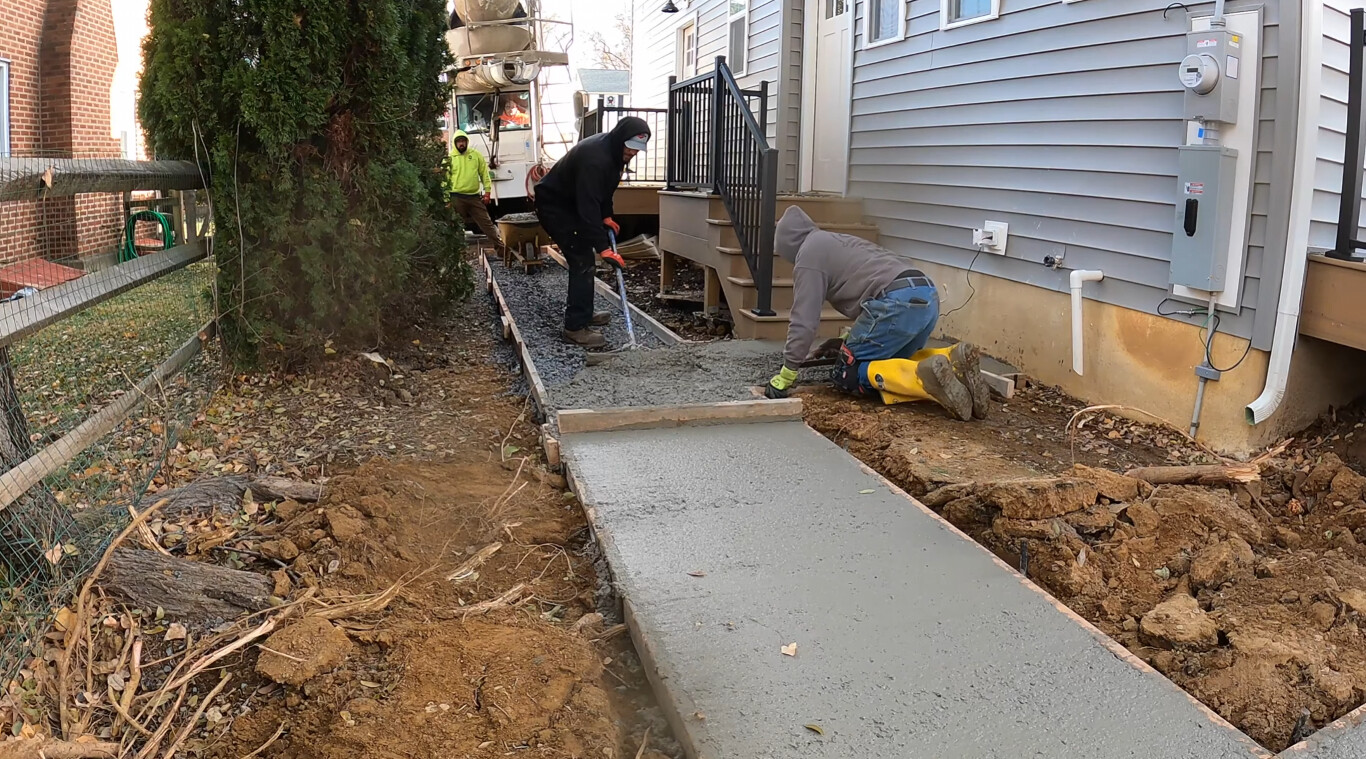
At Harlingen Concrete Contractor, flatwork is one of our specialties. We pour sidewalks, front walkways, garden paths, utility pads, and any other flat concrete surface your property needs. Every pour starts with proper ground prep and ends with a clean, finished surface that drains correctly and holds up to regular use.
Whether you need a simple path from your driveway to your front door or a full sidewalk replacement along your property line, we have the equipment and experience to handle it cleanly and efficiently in Harlingen and throughout the Rio Grande Valley.
What Types of Flatwork Do We Install?
Flatwork is any horizontal concrete surface that is not a slab or foundation. Here is a look at the most common projects we handle for homeowners and property managers in the area.
- Front entry walkways — The path from your driveway or street to your front door. We size it properly, slope it away from the house, and finish it to match your home's style.
- Public and private sidewalks — Street-facing sidewalks along your property line built to local code, as well as private interior sidewalks on your property.
- Garden and backyard paths — Functional paths that keep your backyard clean and usable while protecting landscaping from foot traffic.
- Utility and equipment pads — Flat pads for HVAC units, generators, trash can areas, and similar needs around the home.
- Curb and gutter connections — Proper transitions between your concrete and the street or curb so water flows correctly.
- Decorative walkways — If you want a pattern, texture, or color on your walkway, we can add stamped or decorative concrete finishes that stand out.
Why Level and Drainage Are the Two Things That Matter Most
The number one reason sidewalks and walkways fail early is poor drainage. When water collects on a flat surface, it works its way into small cracks, expands during temperature swings, and slowly breaks down the concrete from the inside out. In Harlingen, where heavy summer rains can drop a lot of water in a short time, this is especially important.
Every walkway we pour is graded with a slight slope — typically about 1 to 2 percent — so water runs off the surface quickly and away from your home's foundation. You would never notice this slope walking on it, but it makes a significant difference in how long the concrete holds up.
Leveling matters for safety too. Even a small height difference between concrete panels can create a trip hazard, especially for older family members or young children. We take care to form and pour panels that sit flush with each other and with any adjoining surfaces like your driveway or porch.
If you have an existing walkway that has become unlevel due to settling, you may be a candidate for concrete leveling instead of a full replacement, which can save you money.
Common Questions About Sidewalks and Walkways
How wide should a residential walkway be?+
For a front entry walkway, the standard width is between 3 and 4 feet. This gives two people enough room to walk side by side comfortably and allows enough width to bring in groceries or move furniture without squeezing. For main sidewalks along a street, local codes may specify a minimum width, typically 4 to 5 feet. Garden or utility paths can be narrower, around 2 to 3 feet. We will help you choose the right width for the function and look you want, and we always check local codes when the walkway borders a public right-of-way.
Do I need a permit to pour a new sidewalk?+
For a private walkway entirely on your own property, a permit is often not required. However, if your sidewalk is adjacent to or within a public right-of-way — meaning the strip of land between your property line and the street — a permit and city inspection are typically required. We are familiar with the permitting requirements in Harlingen and can advise you on what applies to your specific project. When a permit is needed, we can help you understand the process so there are no surprises.
How thick does a walkway need to be?+
Most residential walkways are poured at 4 inches thick, which is plenty for normal foot traffic. If the path will occasionally carry vehicle loads — like a walkway that doubles as a narrow driveway access — we recommend going to 5 or 6 inches and adding rebar reinforcement. We will assess your specific situation and recommend the right thickness so you are not paying for more than you need, but you are also not under-building something that will have to be replaced in a few years.
Head back to our home page to see everything we do, or find out more about our commercial concrete services for larger projects.