Concrete Steps & Stairs
Solid, well-built concrete steps make your home safer and give your front or back entrance a clean, finished look that holds up for decades.
Your Entry Says a Lot About Your Property
The first thing people notice when they approach your home is the entrance. Old, crumbling, or uneven steps tell a story you probably do not want to tell. New concrete steps do the opposite — they say the property is well maintained, safe, and cared for. And when done right, they look that way for a long time without much upkeep.
At Harlingen Concrete Contractor, we build concrete steps and stairs for front doors, back patios, raised entrances, garage entries, and commercial buildings throughout Harlingen, TX and the surrounding Rio Grande Valley. Every set of steps we pour is built with proper dimensions, solid forming, adequate reinforcement, and a finish that sheds water instead of letting it pool.
If your existing steps are cracked, chipped, or separating from the house, we can evaluate whether repair makes sense or whether new steps are the better investment. We will give you a straight answer before any work begins.
What Goes Into a Set of Steps That Lasts
Concrete steps look simple, but a lot of decisions go into building them correctly. Here is what we pay attention to on every project:
- Riser and tread dimensions: Steps that are too tall or too shallow are uncomfortable and unsafe. We follow standard dimensions so every step feels natural to walk on.
- Solid base preparation: Steps need a stable base. We compact the subgrade and, when needed, add gravel to prevent settling and movement over time.
- Steel reinforcement: Rebar inside the concrete helps the steps resist cracking under load and from soil movement beneath them.
- Proper drainage slope: Step treads need a slight forward pitch so rainwater runs off the edge rather than soaking in and weakening the surface.
- Finish selection: We can broom-finish steps for slip resistance, or apply a brushed, exposed aggregate, or stamped finish if you want a more decorative look.
- Separation joints: Where steps meet the house foundation or a landing, we use proper joint material to allow for independent movement and prevent cracking at the connection point.
These details matter. Steps that skip any of them tend to crack at the corners, pull away from the house, or chip at the edges within a few years. We do it right the first time so you are not calling us back to fix the same steps again.
Style Options for Your Steps
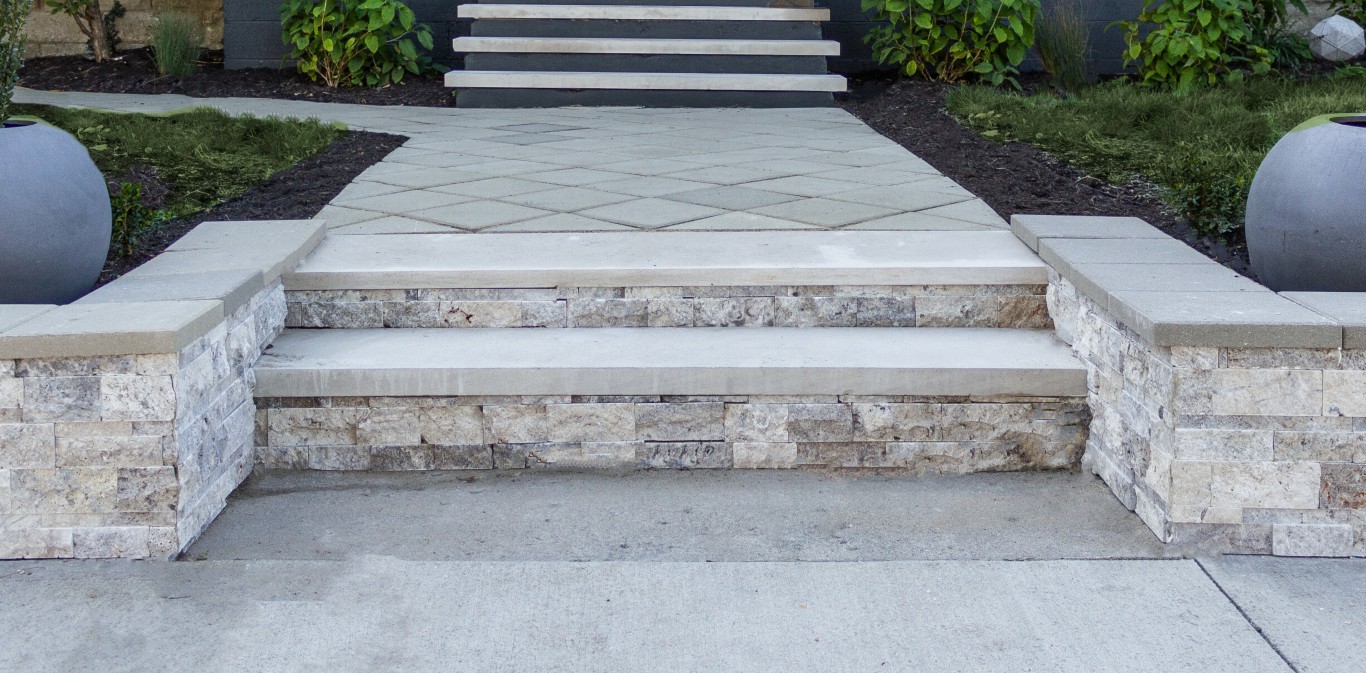
Plain gray concrete steps are functional and clean, and plenty of homeowners prefer that simple look. But if you want something that adds real visual appeal to your entrance, there are several ways to upgrade. Stamped concrete steps can mimic the look of natural stone, brick, or slate. Exposed aggregate gives a textured, speckled finish that holds up well to foot traffic and hides surface wear. A broom finish adds grip with a classic, clean look. Color additives let you match or complement your home's exterior, siding, or existing concrete surfaces.
We can also form steps with rounded noses, decorative side walls, built-in planters, or landing platforms — depending on your space, your taste, and your budget. If you are also planning a patio or walkway alongside the new steps, we will design the whole entrance to work together as one cohesive project. See our stamped and decorative concrete page for more on finish and style options.
Whatever you are picturing, let us know during your free quote. We will help you figure out what is realistic for your space and give you a clear price before any work starts.
Common Questions About Concrete Steps
How long does it take to install new concrete steps?+
The actual forming and pouring usually takes one day for a standard set of residential steps. If old steps need to be demolished and hauled away first, that adds time depending on the size and material. After the pour, the concrete needs to cure before it can handle foot traffic — typically 24 to 48 hours for light use, and up to a week before heavy loads. We will walk you through the timeline during your estimate so you know exactly what to expect.
Can you repair chipped or cracked concrete steps instead of replacing them?+
Sometimes. Minor corner chips or surface cracks can often be patched and still look good. But if the steps are crumbling, have large broken sections, are separating from the foundation, or have settled significantly, replacement usually makes more sense. A patched step that continues to have structural issues will need to be replaced eventually anyway. We will assess your existing steps and let you know which approach will serve you better in the long run — and what each option costs.
Do concrete steps need sealing?+
Sealing is not required, but it is a good idea — especially for steps with decorative finishes or steps in areas with heavy rain and UV exposure. A quality sealer helps repel water, reduces staining, and protects the surface from wear. It can also enhance the color and texture of stamped or exposed aggregate finishes. We recommend sealing new steps a few weeks after the pour, once the concrete has fully cured, and resealing every few years depending on traffic and weather exposure in Harlingen.
Visit our Harlingen concrete contractor home page for the full list of services we offer, or learn about our sidewalk and walkway installation services if you are planning a connected path alongside your new steps.